
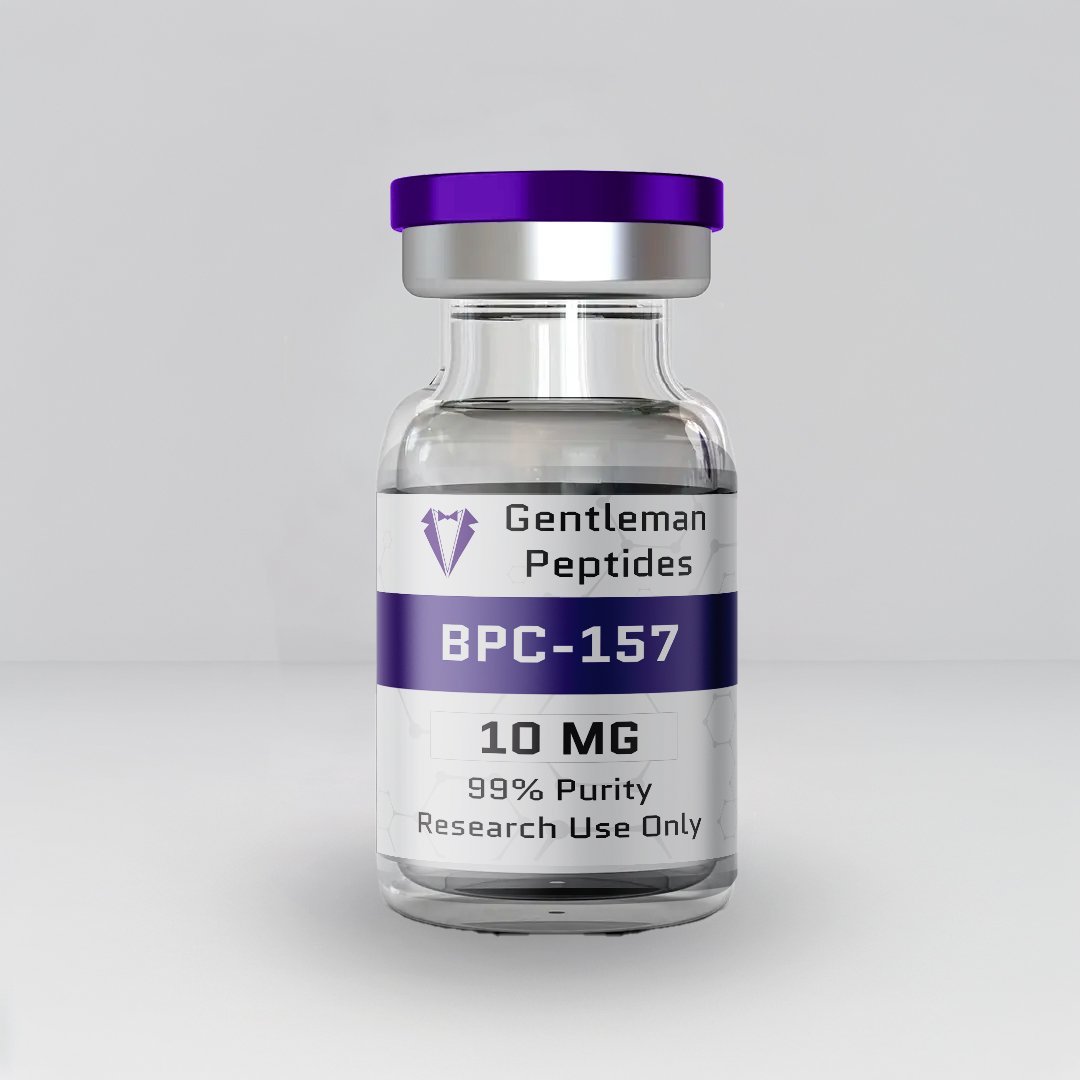

BPC-157 10MG – Scientific Overview and Research Information
What Is BPC-157?
BPC-157, also known as Body Protection Compound-157, is a synthetic pentadecapeptide consisting of 15 amino acids.
It is based on a sequence associated with gastric protein research and has been investigated in experimental models involving gastrointestinal biology, cellular signalling and musculoskeletal tissues.
BPC-157 has attracted scientific interest because researchers have examined its interactions with several biological processes, including vascular-related responses, cellular activity and tissue-related pathways.
Most published investigations have been conducted in laboratory and animal models. Human clinical evidence remains insufficient to establish its safety or effectiveness for medical applications.
Product Specifications
| Specification | Details |
|---|---|
| Product Name | BPC-157 |
| Listed Strength | 10MG |
| Alternative Name | Body Protection Compound-157 |
| Compound Type | Synthetic peptide |
| Peptide Length | 15 amino acids |
| Peptide Classification | Pentadecapeptide |
| Research Areas | Gastrointestinal and musculoskeletal biology |
| Product Category | Vial, according to the listing |
| Chemical Identity | Requires batch-specific verification |
| Purity | Not independently verified |
The 10MG strength is taken from the product listing. Actual identity, sequence, quantity, purity and formulation require supporting batch documentation.
Understanding the Molecular Structure
BPC-157 is a short synthetic peptide containing 15 amino acids.
Its molecular structure is distinct from full-length proteins and hormones.
The peptide sequence is commonly reported as:
Gly-Glu-Pro-Pro-Pro-Gly-Lys-Pro-Ala-Asp-Asp-Ala-Gly-Leu-Val
Its classification as a pentadecapeptide reflects the number of amino-acid residues in the sequence.
Scientific Research Background
1. Gastrointestinal Biology
BPC-157 originated from research involving gastric protein-related sequences.
Experimental investigations have examined its biological activity in gastrointestinal tissue models and animal studies.
These studies have contributed to interest in its cellular and gastrointestinal research profile.
They do not establish that BPC-157 is an effective treatment for gastrointestinal disorders in humans.
2. Tendon and Ligament Research
Preclinical studies have investigated BPC-157 in animal models involving tendons and ligaments.
Researchers have examined cellular responses and tissue-related measurements in these experimental systems.
The findings have contributed to further scientific interest in its possible biological mechanisms.
However, animal studies cannot establish clinical effectiveness for human tendon or ligament injuries.
3. Musculoskeletal Research
Other experimental investigations have examined BPC-157 in models involving skeletal muscle, bone and related tissues.
These studies have focused on biological responses and tissue-related measurements.
The evidence remains predominantly preclinical and does not establish a validated clinical application.
4. Cellular Signalling and Vascular Research
Some experimental studies have investigated BPC-157 in relation to nitric oxide signalling and vascular-related biological processes.
These investigations have explored possible molecular pathways involved in cellular responses.
The precise mechanisms and their relevance to human health remain uncertain.
5. Human Research
Human research involving BPC-157 is very limited.
A small retrospective case series has examined its use in individuals with knee-related conditions, but the study design does not establish a reliable treatment effect.
There is insufficient high-quality controlled clinical evidence to establish human safety, effectiveness or appropriate medical use.
Summary of Research Areas
| Research Area | Scientific Focus | Evidence Type |
|---|---|---|
| Gastrointestinal Biology | Gastric-related experimental models | Preclinical |
| Tendon and Ligament Research | Tissue-related cellular responses | Animal research |
| Musculoskeletal Biology | Muscle and bone experimental models | Animal research |
| Vascular Biology | Investigation of vascular-related pathways | Laboratory and animal research |
| Cellular Signalling | Molecular and cellular responses | Laboratory research |
| Human Clinical Research | Limited exploratory observations | Very limited human evidence |
Evidence Limitations and Scientific Considerations
Limited human evidence: Most published research has been conducted in laboratory and animal models.
Unestablished clinical effectiveness: Experimental findings do not demonstrate that BPC-157 treats injuries or medical conditions in humans.
Uncertain long-term safety: There is insufficient clinical information to establish a validated long-term safety profile.
Immunogenicity: Synthetic peptide preparations may present concerns involving immune responses, aggregation and peptide-related impurities.
Product verification: A product label does not independently establish peptide identity, sequence, purity, sterility or actual quantity.
Regulatory status: BPC-157 is not an FDA-approved medicine for injury recovery, gastrointestinal conditions or other therapeutic applications.
Frequently Asked Questions
What is BPC-157?
BPC-157 is a synthetic 15-amino-acid peptide investigated in preclinical research involving gastrointestinal and musculoskeletal biology.
What does BPC stand for?
BPC is commonly expanded as Body Protection Compound.
Is BPC-157 a peptide?
Yes. It is a synthetic pentadecapeptide containing 15 amino acids.
What has BPC-157 been studied for?
Research has examined gastrointestinal biology, tendon and ligament models, musculoskeletal tissues, cellular signalling and vascular-related processes.
Has BPC-157 been studied in humans?
Human research is very limited and does not establish a reliable clinical safety or effectiveness profile.
Is BPC-157 an approved medicine?
BPC-157 is not an FDA-approved medicine for any therapeutic application.
What does 10MG mean?
The product listing identifies a 10MG quantity. The actual content should be verified using appropriate batch documentation.
What information should be available for scientific evaluation?
Relevant documentation includes peptide identity, amino-acid sequence, quantity, purity, analytical testing and batch traceability.
Scientific References
- US Food and Drug Administration. BPC-157: Pharmacy Compounding Advisory Committee Evaluation.
FDA review of available safety information, immunogenicity concerns and limitations in human evidence.
https://www.fda.gov/media/193773/download - Sikiric P, Seiwerth S, Rucman R, et al. Stable gastric pentadecapeptide BPC 157: Novel therapy in gastrointestinal tract and liver. Current Pharmaceutical Design.
This literature reviews preclinical investigations involving BPC-157.
Important Research Disclaimer
BPC-157 is an investigational peptide and is not an FDA-approved medicine for injury recovery, gastrointestinal disorders or other therapeutic applications.
This information is provided for scientific and educational reference. It does not establish human clinical effectiveness, an appropriate method of administration or a validated long-term safety profile.
It should not be interpreted as a recommendation for human or animal consumption, self-administration, diagnosis, treatment, cure or prevention of any disease.
Product identity, sequence, quantity, purity, sterility and batch composition require appropriate analytical documentation. Applicable laws and regulatory requirements should be reviewed before any product is offered or supplied.
Be the first to review “BPC-157 10mg”
Related products

PEPTIDES
PEPTIDES

PEPTIDES

PEPTIDES
PEPTIDES
PEPTIDES
PEPTIDES
PEPTIDES
Reviews
There are no reviews yet.