


BPC-157 & TB-500 – Scientific Overview and Research Information
What Are BPC-157 and TB-500?
BPC-157 and TB-500 are two distinct synthetic peptide-related compounds that have attracted scientific interest because of their proposed involvement in cellular and tissue-related biological processes.
Although they are frequently discussed together, they have different molecular structures and separate research histories.
BPC-157
BPC-157, also known as Body Protection Compound-157, is a synthetic pentadecapeptide consisting of 15 amino acids.
It is based on a sequence associated with a protective protein found in gastric juice. Experimental research has investigated BPC-157 in relation to cellular signalling, vascular responses, gastrointestinal biology and musculoskeletal tissue models.
Most of its published research has been conducted in laboratory and animal models.
TB-500
TB-500 is commonly used to describe a synthetic peptide fragment associated with thymosin beta-4.
It is important to distinguish TB-500 from full-length thymosin beta-4, which is a naturally occurring 43-amino-acid protein involved in several cellular processes.
TB-500 is commonly identified as a seven-amino-acid fragment, Ac-LKKTETQ. It should not automatically be treated as biologically or clinically equivalent to full-length thymosin beta-4.
Research involving thymosin beta-4 cannot automatically be attributed to TB-500.
Product Specifications
| Specification | Details |
|---|---|
| Product Name | BPC-157 & TB-500 |
| Compound 1 | BPC-157 |
| Compound 1 Length | 15 amino acids |
| Compound 2 | TB-500 |
| Compound 2 Description | Commonly identified as a thymosin beta-4 fragment |
| Commonly Reported TB-500 Fragment | Ac-LKKTETQ |
| Compound Type | Synthetic peptide compounds |
| Research Areas | Cellular biology and tissue-related research |
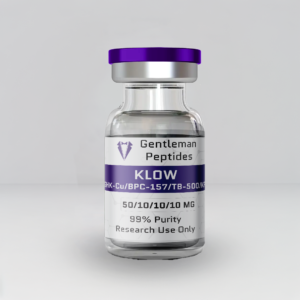
| Product Category | Vials, according to the competitor listing |
| Individual Quantities | Not specified |
| Blend Ratio | Not specified |
| Supplied Form | Requires product-specific confirmation |
The competitor’s listing does not disclose the individual amount of either compound or the blend ratio. The exact molecular identity, sequence, salt form, total content and formulation should be verified against the actual product documentation.
Understanding the Biological Background
BPC-157 and TB-500 are associated with different areas of peptide research.
Understanding their individual biological backgrounds is important when evaluating research involving the two compounds.
1. BPC-157 and Gastric Protein Research
BPC-157 is a synthetic peptide based on a sequence associated with gastric protein research.
Its experimental investigation has included cellular and animal models involving gastrointestinal tissues and other biological systems.
Researchers have examined its relationship with several biological processes, including:
- Cellular signalling.
- Vascular-related responses.
- Inflammatory pathways.
- Tissue-related cellular activity.
- Gastrointestinal biology.
These findings are primarily preclinical and do not establish clinical effectiveness in humans.
2. TB-500 and Thymosin Beta-4
Thymosin beta-4 is a naturally occurring protein involved in several cellular processes.
It has been studied in relation to actin regulation, cell migration and cellular organization.
TB-500 is commonly described as a shorter synthetic fragment associated with thymosin beta-4.
However, the full-length protein and the shorter fragment are different molecular entities. Findings from studies involving full-length thymosin beta-4 cannot automatically be applied to TB-500.
3. Cellular Migration and Actin Regulation
Actin is an important structural protein involved in maintaining cell shape and supporting cellular movement.
Thymosin beta-4 has been investigated for its interaction with actin-related cellular processes.
Research into these pathways provides background for studying cellular organization and migration.
However, the existence of a biological mechanism does not establish a clinical outcome or therapeutic effect.
What Does Research Show About BPC-157?
Research involving BPC-157 has primarily focused on experimental models of cellular biology, gastrointestinal processes and musculoskeletal tissues.
1. Research into Gastrointestinal Biology
BPC-157 originated from research involving gastric protein-related sequences.
Laboratory and animal investigations have examined its relationship with gastrointestinal tissues and several cellular processes.
These experiments have contributed to scientific interest in the compound’s biological characteristics.
However, findings from experimental models do not establish that BPC-157 is an effective treatment for gastrointestinal conditions in humans.
2. Research into Tendon and Ligament Models
Preclinical research has examined BPC-157 in experimental models involving tendons and ligaments.
Researchers have investigated cellular responses, tissue-related measurements and structural changes in animal models.
These studies have provided a basis for further scientific investigation into its biological activity.
However, animal findings cannot be treated as proof of human tendon or ligament recovery.
3. Research into Musculoskeletal Biology
Additional animal studies have investigated BPC-157 in models involving skeletal muscle, bone and other musculoskeletal tissues.
The research has focused on cellular responses and tissue-related measurements.
Despite the amount of preclinical investigation, controlled human evidence remains insufficient to establish clinical effectiveness for musculoskeletal conditions.
4. Human Research and Clinical Evidence
Human research involving BPC-157 remains extremely limited.
A small retrospective case series has examined its use in individuals with knee-related conditions. The study lacked a control group and relied on subjective outcome measurements.
Such research cannot establish a reliable treatment effect or a validated safety profile.
The FDA has also identified important gaps in available human safety information, including concerns about immunogenicity and peptide-related impurities.
What Does Research Show About TB-500?
Research involving TB-500 must be distinguished from research involving full-length thymosin beta-4.
1. Thymosin Beta-4 and Cellular Biology
Full-length thymosin beta-4 has been investigated in relation to actin regulation, cellular migration and other biological processes.
Research has examined its role in different experimental systems, including cellular and animal models.
These investigations provide scientific background on thymosin beta-4 but do not establish that TB-500 has equivalent activity.
2. Research into Tissue-Related Processes
Experimental research involving thymosin beta-4 has explored cellular behaviour in several tissue models.
Researchers have examined cellular migration, tissue responses and related biological measurements.
However, these findings should not be used as direct evidence for the clinical effects of TB-500.
3. Human Evidence for TB-500
Direct human evidence for TB-500 is extremely limited.
The FDA’s evaluation did not identify adequate clinical studies or human exposure data to establish its safety profile through proposed routes of administration.
It is therefore important not to confuse human research involving full-length thymosin beta-4 with research involving the shorter TB-500 fragment.
4. Molecular Identity and Product Characterization
Because TB-500 is frequently used as a commercial designation, accurate molecular identification is especially important.
A product’s exact peptide sequence, terminal modifications, purity and composition should be established through appropriate analytical documentation.
The name TB-500 alone does not verify the molecular identity of a particular preparation.
Research into BPC-157 and TB-500 as a Combination
BPC-157 and TB-500 are frequently marketed together as a peptide combination.
However, their separate experimental research histories should not be interpreted as proof that combining them produces a particular biological effect.
Important considerations include:
Separate molecular structures: BPC-157 and TB-500 are different compounds with different molecular characteristics.
Different research backgrounds: BPC-157 has been investigated extensively in animal models, while much of the broader thymosin beta-4 literature concerns the full-length protein rather than TB-500.
Limited combination evidence: There is no established controlled human clinical evidence demonstrating the safety or effectiveness of the marketed BPC-157 and TB-500 combination.
Unknown blend composition: The individual quantities and ratio of the compounds in a commercial blend must be verified.
Product characterization: Identity, concentration, peptide-related impurities, sterility and manufacturing consistency require appropriate analytical testing.
Overall, the combination should be treated as a preparation containing two distinct investigational compounds rather than as an established combined treatment.
Summary of Research Areas
| Research Area | Compound | Evidence Type |
|---|---|---|
| Gastrointestinal Biology | BPC-157 | Laboratory and animal research |
| Tendon and Ligament Models | BPC-157 | Preclinical research |
| Musculoskeletal Biology | BPC-157 | Animal research |
| Cellular Migration | Thymosin beta-4 | Laboratory and animal research |
| Actin Regulation | Thymosin beta-4 | Biochemical and cellular research |
| TB-500 Characterization | TB-500 | Molecular and analytical research |
| Combined Formulations | BPC-157 & TB-500 | Insufficient controlled human evidence |
Evidence Limitations and Scientific Considerations
Several important limitations apply to research involving BPC-157 and TB-500.
Limited human evidence: Most BPC-157 research has been conducted in laboratory and animal models. Direct human evidence remains limited.
TB-500 is not full-length thymosin beta-4: These are different molecular entities. Research findings involving full-length thymosin beta-4 cannot automatically establish the properties of TB-500.
Combination effectiveness is unestablished: Separate research involving the individual compounds does not establish the effectiveness of a combined preparation.
No established clinical treatment protocol: Validated clinical dosing, pharmacokinetics and long-term safety information remain insufficient.
Immunogenicity considerations: Peptide preparations can present risks involving immune responses, aggregation and peptide-related impurities.
Product quality matters: Identity, purity, concentration, sterility and manufacturing consistency require appropriate verification.
Regulatory status: Neither compound is an FDA-approved treatment for musculoskeletal injury or tissue recovery.
Overall, BPC-157 and TB-500 remain investigational compounds. Their scientific background is primarily associated with preclinical cellular and tissue-related research, and their combined clinical effectiveness has not been established.
Frequently Asked Questions
What is BPC-157?
BPC-157 is a synthetic 15-amino-acid peptide based on a sequence associated with gastric protein research.
What is TB-500?
TB-500 is commonly used to describe a synthetic seven-amino-acid fragment associated with thymosin beta-4.
Are BPC-157 and TB-500 the same compound?
No. They have different molecular structures and separate research histories.
Is TB-500 the same as thymosin beta-4?
No. Full-length thymosin beta-4 contains 43 amino acids, while TB-500 is commonly identified as a shorter seven-amino-acid fragment.
What has BPC-157 been studied for?
Research has examined BPC-157 in gastrointestinal, cellular and musculoskeletal experimental models.
What has TB-500 been studied for?
TB-500 is associated with research into thymosin beta-4-related molecular biology. Direct human evidence for the marketed fragment remains very limited.
Has the BPC-157 and TB-500 combination been clinically proven?
No. There is insufficient controlled human clinical evidence to establish the safety or effectiveness of the combined preparation.
Are these compounds approved medicines?
Neither BPC-157 nor TB-500 is an FDA-approved medicine for injury recovery, tissue repair or other therapeutic applications.
What does the product blend contain?
The competitor listing identifies BPC-157 and TB-500 but does not disclose their individual quantities or blend ratio. Those details require confirmation from the actual product specification.
What should be verified in a peptide blend?
Important information includes the identity of each peptide, individual quantities, sequence, purity, concentration, sterility and batch-specific analytical documentation.
Scientific References
- US Food and Drug Administration. (2026). BPC-157: Pharmacy Compounding Advisory Committee Evaluation.
FDA evaluation discussing available clinical safety information, proposed routes of administration, immunogenicity and peptide-related impurities.
https://www.fda.gov/media/193773/download - US Food and Drug Administration. TB-500: Pharmacy Compounding Advisory Committee Evaluation.
FDA evaluation discussing the limited human exposure information and safety uncertainties associated with TB-500.
https://www.fda.gov/media/193349/download - Tham A, Hodgkins CW, Kennedy JG. (2026). Investigational Peptides in Orthopaedic Practice: Evidence, Safety, and Patient Counseling for BPC-157, Thymosin Beta-4, and TB-500. Journal of the American Academy of Orthopaedic Surgeons.
DOI: https://doi.org/10.5435/JAAOS-D-26-00049
PMID: https://pubmed.ncbi.nlm.nih.gov/42937313/
Important Research Disclaimer
BPC-157 and TB-500 are investigational peptide-related compounds and are not FDA-approved medicines for injury recovery, tissue repair or other therapeutic applications.
The information presented is for scientific and educational reference only. It does not establish human clinical effectiveness, an appropriate method of administration or a validated long-term safety profile.
The information should not be interpreted as a recommendation for human or animal consumption, self-administration, diagnosis, treatment, cure or prevention of any disease.
The exact identity, individual quantities, blend ratio, peptide purity, sterility and batch composition should be supported by appropriate analytical documentation. Applicable laws and regulatory requirements should be reviewed before any product is offered or supplied.
Be the first to review “BPC-157 & TB-500”
Related products
PEPTIDES
PEPTIDES
PEPTIDES
PEPTIDES
PEPTIDES

PEPTIDES
PEPTIDES

PEPTIDES
Reviews
There are no reviews yet.