
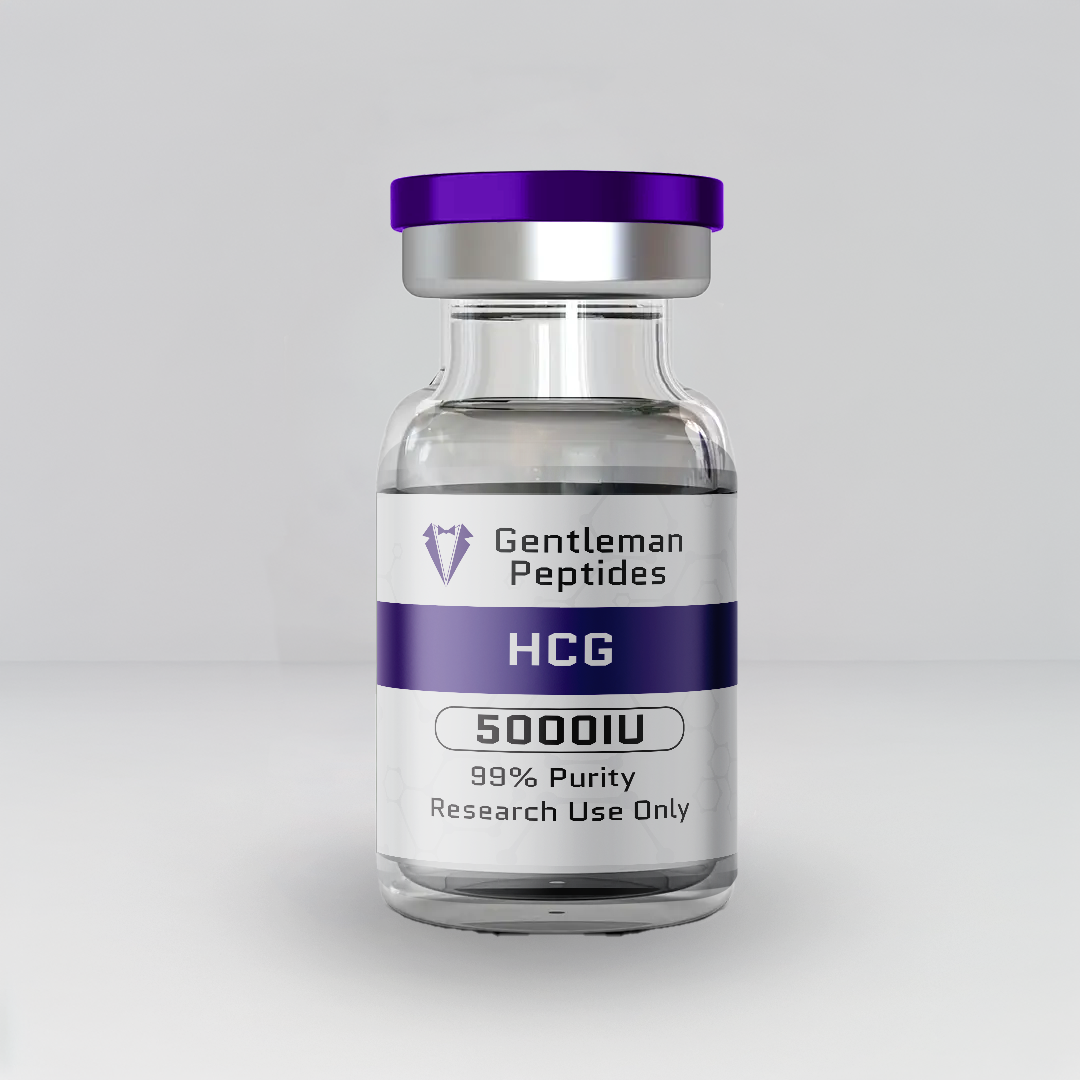
HCG – Human Chorionic Gonadotropin: Scientific and Medical Overview
Product Overview
Human chorionic gonadotropin (HCG) is a glycoprotein hormone naturally produced by placental cells during pregnancy. It plays an important role in reproductive biology and is structurally related to luteinizing hormone (LH).
HCG interacts with luteinizing hormone/chorionic gonadotropin receptors (LHCGR), influencing hormone signalling in reproductive tissues. Pharmaceutical HCG preparations have been used in selected medical settings under professional supervision.
HCG is not a conventional research peptide or an ordinary nutritional supplement. It is a prescription hormone with specific medical indications, contraindications and potential adverse effects.
The product listing reviewed identifies the item as HCG but does not specify its strength, source, formulation or manufacturer. These details should be confirmed from the actual product packaging and appropriate documentation.
Product Specifications
| Specification | Available information |
|---|---|
| Product name | HCG |
| Full name | Human Chorionic Gonadotropin |
| Product category | Vials |
| Compound classification | Glycoprotein hormone |
| Biological receptor | LH/CG receptor (LHCGR) |
| Vial strength | Not specified |
| Formulation | Not confirmed |
| Manufacturer | Not specified |
| Batch testing | Not independently verified |
What Is Human Chorionic Gonadotropin?
HCG is composed of two protein subunits, known as alpha and beta subunits.
The alpha subunit is structurally similar to the alpha subunits found in other glycoprotein hormones, including LH, follicle-stimulating hormone (FSH) and thyroid-stimulating hormone (TSH).
The beta subunit provides much of the hormone’s biological specificity.
HCG is particularly important during early pregnancy, when it supports the corpus luteum and helps maintain progesterone production.
Biological Mechanism of Action
HCG acts through the luteinizing hormone/chorionic gonadotropin receptor.
This receptor is found in reproductive tissues, including ovarian and testicular cells.
Following receptor activation, intracellular signalling pathways are stimulated, including cyclic adenosine monophosphate (cAMP)-related signalling.
The biological effects depend on the tissue involved and the physiological context.
Hormonal Signalling
HCG and LH share a receptor, allowing HCG to produce certain biological effects associated with LH activity.
In the ovaries, this signalling is involved in processes associated with follicular maturation and ovulation.
In the testes, LH-receptor activity is associated with Leydig-cell function and testosterone production.
Pregnancy-Related Biology
During early pregnancy, HCG supports the corpus luteum, helping maintain progesterone production before placental hormone production becomes established.
HCG is also widely used as a biological marker in pregnancy testing because its concentration changes during pregnancy.
Established Medical Applications
Pharmaceutical HCG has recognised medical applications in selected circumstances.
1. Selected Cases of Male Hypogonadotropic Hypogonadism
In certain patients with hypogonadotropic hypogonadism, inadequate pituitary hormone signalling can affect testicular function.
HCG can provide LH-like receptor activity in selected medical treatment settings.
The suitability of treatment depends on the underlying diagnosis and individual clinical assessment.
2. Selected Fertility Treatments
HCG has been used in reproductive medicine as part of specific fertility treatment protocols.
Its biological activity can support processes associated with final follicular maturation and ovulation in appropriately selected patients.
Treatment requires professional assessment and monitoring.
3. Selected Cases of Prepubertal Cryptorchidism
Some pharmaceutical HCG products have historically been indicated for selected cases of prepubertal cryptorchidism, a condition in which one or both testes have not descended into the scrotum.
This application is subject to medical evaluation and product-specific prescribing information.
HCG and Weight Management: Important Evidence Distinction
HCG has sometimes been promoted in connection with weight-loss programmes.
However, regulatory medical information does not establish HCG as an effective treatment for obesity.
FDA-approved product labelling states that HCG has not been demonstrated to provide additional weight loss beyond that associated with caloric restriction. It also does not establish a special effect on fat distribution or appetite.
Consequently, HCG should not be described as a proven weight-loss compound.
Safety and Medical Considerations
HCG is a biologically active prescription hormone. Its use requires appropriate medical assessment and consideration of the relevant product’s prescribing information.
Potential adverse reactions include:
- Headache.
- Irritability and restlessness.
- Fatigue.
- Fluid retention or oedema.
- Breast enlargement in males.
- Injection-site discomfort or reactions.
- Hypersensitivity reactions, including rare severe allergic reactions.
In fertility treatment, important potential complications include ovarian hyperstimulation syndrome, ovarian cyst complications, multiple pregnancy and thromboembolic events.
Certain medical conditions and hormone-sensitive tumours may contraindicate treatment.
HCG should not be treated as a general-purpose wellness, bodybuilding or weight-management product.
Research and Scientific Considerations
HCG continues to be relevant to reproductive endocrinology and the study of glycoprotein hormone signalling.
Scientific investigations involving HCG include:
- Luteinizing hormone receptor activity.
- Reproductive hormone signalling.
- Ovarian and testicular physiology.
- Early pregnancy biology.
- Fertility-related endocrine processes.
- Hormone measurement and diagnostic testing.
Research findings should be interpreted according to the specific HCG formulation, study population and medical context.
Summary of HCG Research Areas
| Research area | Scientific focus |
|---|---|
| Reproductive endocrinology | Hormonal regulation and reproductive function |
| LH receptor signalling | Activation of LHCGR pathways |
| Male reproductive biology | Leydig-cell function and endocrine signalling |
| Female reproductive biology | Follicular maturation and ovulatory processes |
| Pregnancy biology | Corpus luteum support and progesterone production |
| Clinical diagnostics | Measurement of HCG as a pregnancy biomarker |
Frequently Asked Questions
What does HCG stand for?
HCG stands for human chorionic gonadotropin, a glycoprotein hormone naturally produced by placental tissue during pregnancy.
Is HCG a peptide?
HCG is a glycoprotein hormone made up of protein subunits. Although it contains peptide chains, it is more accurately classified as a glycoprotein hormone rather than a conventional short research peptide.
What receptor does HCG activate?
HCG acts on the luteinizing hormone/chorionic gonadotropin receptor, also known as LHCGR.
Is HCG used in fertility medicine?
Yes. Certain prescription HCG preparations have recognised applications in selected fertility treatment settings under specialist supervision.
Is HCG approved as a weight-loss treatment?
No. FDA product labelling states that HCG has not been demonstrated to provide additional weight loss beyond caloric restriction.
What strength is this HCG vial?
The competitor listing reviewed does not provide a confirmed vial strength. The actual packaging or manufacturer documentation should be checked before adding a strength to the product specifications.
Scientific References
- US Food and Drug Administration. Novarel (chorionic gonadotropin) for injection – Prescribing Information. DailyMed.
https://dailymed.nlm.nih.gov/dailymed/drugInfo.cfm?setid=ac6918ff-9dc3-40d9-8619-54b26e4bdfc8 - US Food and Drug Administration. Pregnyl (chorionic gonadotropin) for injection – Prescribing Information. DailyMed.
https://dailymed.nlm.nih.gov/dailymed/drugInfo.cfm?setid=1e94155f-19be-4944-b197-be4edbb4faf9 - US Food and Drug Administration. Chorionic Gonadotropin – Drug Label Information. DailyMed.
https://dailymed.nlm.nih.gov/dailymed/drugInfo.cfm?setid=f93b2baa-03ac-4650-b35a-20b818d712d6
Important Medical and Regulatory Disclaimer
This page is provided for general scientific and educational information. HCG is a prescription hormone, and this description does not constitute medical advice, prescribing guidance or an endorsement of unverified products.
The product listing does not establish the identity, strength, source, sterility, quality or regulatory status of the specific vial. Those details require appropriate manufacturer and batch documentation.
Prescription medicines should be obtained and used only through legally authorised channels and under appropriate medical supervision. Regulatory requirements vary by country.
Be the first to review “HCG”
Related products
PEPTIDES
PEPTIDES
PEPTIDES
PEPTIDES
PEPTIDES
PEPTIDES

PEPTIDES

PEPTIDES
Reviews
There are no reviews yet.