


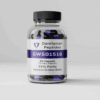
Cardarine Liquid 30ML – GW501516 Scientific Overview and Safety Information
Overview of Cardarine Liquid 30ML
Cardarine, scientifically identified as GW501516, is a synthetic small-molecule compound developed as an experimental agonist of peroxisome proliferator-activated receptor delta (PPARδ).
It is also known as GW1516 and Endurobol.
GW501516 has been investigated in metabolic research involving lipid regulation, fatty-acid metabolism and cellular energy signalling.
Cardarine Liquid 30ML is the listed liquid-format presentation of this compound. Unlike peptide-based products, GW501516 is not a peptide. It is also not a selective androgen receptor modulator (SARM).
Although early research explored potential pharmaceutical applications, development was discontinued following serious tumour-related findings in long-term animal studies.
GW501516 has not been approved as a medicine.
Product Specifications
| Attribute | Details |
|---|---|
| Product name | Cardarine Liquid 30ML |
| Active compound identified by listing | GW501516 |
| Common name | Cardarine |
| Alternative names | GW1516, Endurobol |
| Compound classification | Synthetic small molecule |
| Pharmacological class | PPARδ agonist |
| Product category | Liquid |
| Listed liquid volume | 30ML |
| Active ingredient concentration | Not independently confirmed |
| Total active ingredient quantity | Not confirmed |
| Solvent composition | Not confirmed |
| Batch-specific analytical testing | Not independently verified |
Important specification distinction: 30ML represents the stated liquid volume. It does not mean 30MG and does not establish how much GW501516 is present in each millilitre.
The concentration, total active ingredient quantity and solvent composition should be verified through manufacturer documentation before being published as confirmed product specifications.
Scientific Background of GW501516
GW501516 was developed to investigate the biological activity of PPARδ, a nuclear receptor involved in regulating genes associated with lipid metabolism and cellular energy processes.
PPARδ belongs to the peroxisome proliferator-activated receptor family, alongside PPARα and PPARγ.
These receptors participate in biological processes involving lipid handling, metabolic regulation and cellular signalling.
GW501516 was designed to selectively activate PPARδ, making it a subject of early pharmacological research.
Mechanism of Action
1. PPARδ Receptor Activation
PPARδ is a nuclear receptor that regulates gene expression.
When activated, it can influence genes associated with fatty-acid metabolism, lipid handling and energy-related cellular processes.
GW501516 binds to and activates this receptor.
Researchers investigated this interaction to better understand the role of PPARδ in metabolic regulation.
2. Lipid Metabolism Research
Early investigations examined the relationship between PPARδ activation and lipid-related biological pathways.
Research included studies of lipid biomarkers and metabolic processes.
These investigations contributed to the original scientific interest in GW501516, but they did not establish a safe or effective therapeutic application.
3. Cellular Energy Regulation
PPARδ signalling has also been investigated in relation to cellular energy regulation.
Preclinical experiments examined how receptor activation influenced gene expression associated with metabolic activity.
The clinical significance of these experimental observations remains uncertain.
Research History and Scientific Findings
Early Metabolic Research
GW501516 was initially investigated as a potential pharmaceutical candidate for metabolic and cardiovascular-related conditions.
Early studies examined its effects on selected lipid-related biomarkers and PPARδ signalling.
Although some short-term human investigations reported changes in metabolic measurements, these findings did not establish long-term safety or clinical effectiveness.
Preclinical Research
Animal studies investigated the effects of GW501516 on metabolic pathways and biological responses.
Some experiments reported changes in lipid metabolism and exercise-related adaptations.
These findings contributed to the compound’s early scientific profile, but they did not establish an approved medical application.
Long-Term Toxicology Findings
Long-term animal toxicology studies identified serious tumour-related findings.
A 104-week rat carcinogenicity study reported neoplastic findings involving multiple tissues, including the liver, urinary bladder, thyroid and reproductive organs.
A separate long-term mouse study also reported tumour-related findings.
These findings contributed to the discontinuation of further development.
Animal findings cannot quantify the exact risk in humans, but they represent an important unresolved safety concern.
Liquid Formulation and Scientific Considerations
A liquid presentation introduces additional formulation questions that are not applicable in exactly the same way to a solid capsule or powder.
Concentration and Volume
Liquid volume and active ingredient concentration are separate measurements.
A 30ML container does not establish the amount of GW501516 present in the formulation.
The concentration must be supported by appropriate product documentation.
Solubility
Published laboratory information from Selleck Chemicals identifies GW501516 as insoluble in water under the tested conditions.
Its reported solubility differs across solvents, including DMSO and ethanol.
This information concerns laboratory-grade compound data and does not establish the composition or quality of any particular commercial liquid formulation.
Formulation Stability
A liquid formulation requires appropriate characterization of its chemical stability and physical properties.
Relevant information includes:
- Verified active ingredient concentration.
- Solvent and excipient identification.
- Chemical stability data.
- Storage conditions supported by testing.
- Batch-specific identity and analytical documentation.
These details have not been independently confirmed for this product listing.
Summary of Scientific Research
| Research area | Scientific focus | Evidence status |
|---|---|---|
| PPARδ signalling | Receptor activation and gene expression | Demonstrated experimentally |
| Lipid metabolism | Lipid-related metabolic pathways | Preclinical and early human research |
| Cellular energy regulation | Metabolic gene expression | Primarily experimental |
| Liquid formulation | Solubility and formulation characteristics | Requires product-specific verification |
| Chemical stability | Stability of the finished liquid | Not independently established |
| Long-term toxicology | Tumour-related findings in animal studies | Serious safety concern |
| Human safety | Long-term effects | Not established |
Evidence Limitations and Scientific Considerations
GW501516 has a limited clinical development history and significant unresolved safety concerns.
Important limitations include:
- Serious tumour-related findings in long-term animal studies.
- No established long-term human safety profile.
- No approved therapeutic indication.
- Insufficient evidence to establish a favourable human risk-benefit profile.
- Uncertainty about the long-term consequences of PPARδ activation.
- No independently verified concentration or solvent information for this liquid listing.
The absence of established human safety data should not be interpreted as evidence that the compound is safe.
Regulatory and Sporting Status
GW501516 is not an approved medicine.
It is included in the World Anti-Doping Agency’s prohibited-substance framework as a metabolic modulator and is prohibited at all times, both in and out of competition.
This is relevant to athletes and anyone subject to anti-doping regulations.
Frequently Asked Questions
What is Cardarine Liquid 30ML?
It is a listed liquid-format presentation identified with GW501516, a synthetic small molecule investigated in PPARδ-related metabolic research.
Is Cardarine a peptide?
No. Cardarine is a synthetic small molecule, not a peptide.
What does 30ML mean?
30ML refers to the stated liquid volume of the container. It does not establish the amount or concentration of the active compound.
What is the active compound in Cardarine?
The active compound is identified as GW501516, also known as GW1516 or Endurobol.
Is Cardarine approved for medical use?
No. GW501516 has not been approved as a medicine.
Why was GW501516 development discontinued?
Further development was discontinued following serious tumour-related findings in long-term animal toxicology studies.
Does the liquid format establish better absorption?
No. The liquid presentation alone does not establish absorption, bioavailability, safety or effectiveness in humans.
How is the concentration of Cardarine Liquid established?
The concentration requires appropriate manufacturer documentation and analytical verification. The 30ML volume alone cannot establish it.
Scientific References
- PubChem. GW 501516 – Compound Summary, CID 9803963.
https://pubchem.ncbi.nlm.nih.gov/compound/Cardarine - Selleck Chemicals. GW501516 (GSK-516, Cardarine) Technical Data Sheet.
https://www.selleckchem.com/datasheet/GW501516-S147302-DataSheet.html - Geiger LE, Dunsford WS, Lewis DJ, et al. (2009). Rat Carcinogenicity Study with GW501516, a PPAR Delta Agonist. Society of Toxicology Annual Meeting, abstract 895.
- Newsholme SJ, Dunsford WS, Brodie T, et al. (2009). Mouse Carcinogenicity Study with GW501516, a PPAR Delta Agonist. Society of Toxicology Annual Meeting, abstract 896.
- Sport Integrity Australia. GW1516 Information.
https://www.sportintegrity.gov.au/what-we-do/anti-doping/substance-education/gw1516-information
Important Safety Disclaimer
Cardarine (GW501516) is an investigational compound that has not been approved as a medicine. Its development was discontinued following serious tumour-related findings in animal studies.
The information on this page is provided for scientific and educational reference. It does not establish safety, effectiveness or suitability for human or veterinary use and does not constitute medical advice.
Product identity, concentration, formulation and analytical quality should be supported by appropriate manufacturer documentation. Regulatory requirements vary by jurisdiction.
Be the first to review “Cardarine Liquid 30ML”
Related products
PEPTIDES
PEPTIDES
PEPTIDES
PEPTIDES
PEPTIDES
PEPTIDES
PEPTIDES

PEPTIDES
Reviews
There are no reviews yet.